

According to international convention, whenever I set out to achieve a goal, I always begin with some other activity to remind myself that this task must be completed—either overtly or subtly. This initial act of commitment is what we call a sense of ritual. That’s why I am writing these words to introduce my intention to accomplish this task.
Will AI Devour Text?
Over the past week, while browsing through various blogs, I discovered many valuable and meaningful articles. Compared to the numerous generic, attention-seeking pieces online, these writings are refreshing—a rare clean corner of the internet. Most of these blogs have been updated for five or six years. Reading them from their early posts to the most recent ones, one can witness the evolution of both the author and his surroundings, which is truly fascinating, as though we had met too late.
Nowadays, much of the content online is generated by AI, and many Q&A forums have become less active. If you have a question, you simply ask AI. It is foreseeable that the internet will shrink further, and the rich content ecosystem may largely disappear. With AI in the picture, there will naturally be less need for human-produced text, since no one can produce words as quickly as AI.
But is there still value in writing personally? I believe that writing something on your own can be even more valuable. Personal experience, specialized skills, and domain knowledge are extremely important.
When ChatGPT first emerged two years ago, we criticized its content for having too distinct an AI flavor, and enthusiasts experimented with various prompt techniques to remove that trace of AI. Now, two years later, ChatGPT can produce lengthy research reports, and content generated by DeepSeek often leaves us in awe. Who knows—perhaps one day we will complain that it doesn’t have enough of an AI touch?
Ultimately, our existence depends on connecting with other people. Whether AI has made the world a better place depends on if it has improved the lives of real individuals. A simple cup of coffee is enough for me to know if you’ve improved.
I am not sure about the future, but at this moment I want to write down my observations and interests. For now, I plan to post once a week under the name Bolyn Weekly. The name is based on its Chinese pronunciation—I hope to keep it updated for at least five years.
Running Page Deployment Successful
While browsing GitHub, I discovered a project that downloads your running data and then generates a Running Page. For running enthusiasts, such an interface is pretty cool. After spending several hours on it, I finally got it working. You can check it out at Running Page.

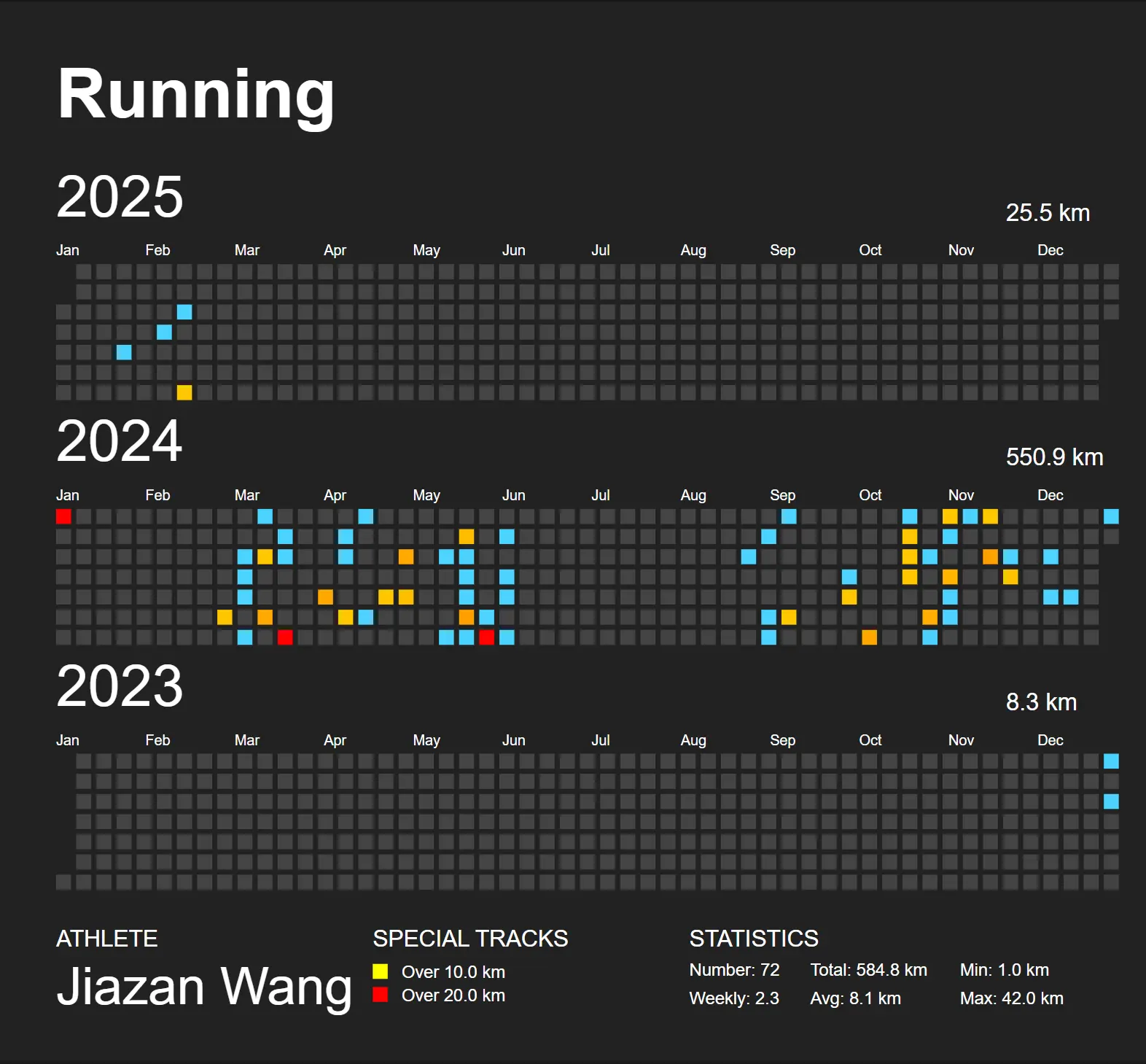
During this process, I encountered quite a few pitfalls. Here are some personal experiences and lessons learned.
First, the project is excellent, though its star count is quite low compared to many others. I believe a major reason is its poorly written help documentation. The deployment instructions are utterly disorganized and lack logic, which likely causes many to stumble. Fewer users lead to less exposure and, naturally, fewer stars.
How did I solve this? Largely by relying on ChatGPT. I must admit that AI now possesses remarkable coding capabilities. No matter what error message you receive, if you provide all of it and try methodically, you will eventually find a solution. Of course, my own cleverness and problem-solving skills also played a part. Learning how to harness AI for programming while maintaining your own project capabilities is something worth considering.
Another issue was that the project requires GitHub Actions to run automatically. After setting everything up, it did not synchronize my latest data, which was quite puzzling. I am not sure if it is supposed to sync on a daily schedule or if there is another reason. For now, I will set it aside and revisit in a few days. If synchronization still fails, I might need to update it manually—whether weekly, monthly, semi-annually, or annually—or modify the code myself. The project isn’t complex, and the logic is somewhat understandable. I haven’t decided yet; for now, this is the plan.
The final lesson is that technical documentation must be well written. If you want others to appreciate your project, being able to understand it is the first step—once they do, they might like it. But only if they can implement it will they share it. Therefore, the documentation needs to be concise, clear, and logically structured so that more people can recreate and promote your project.
Useful Tools
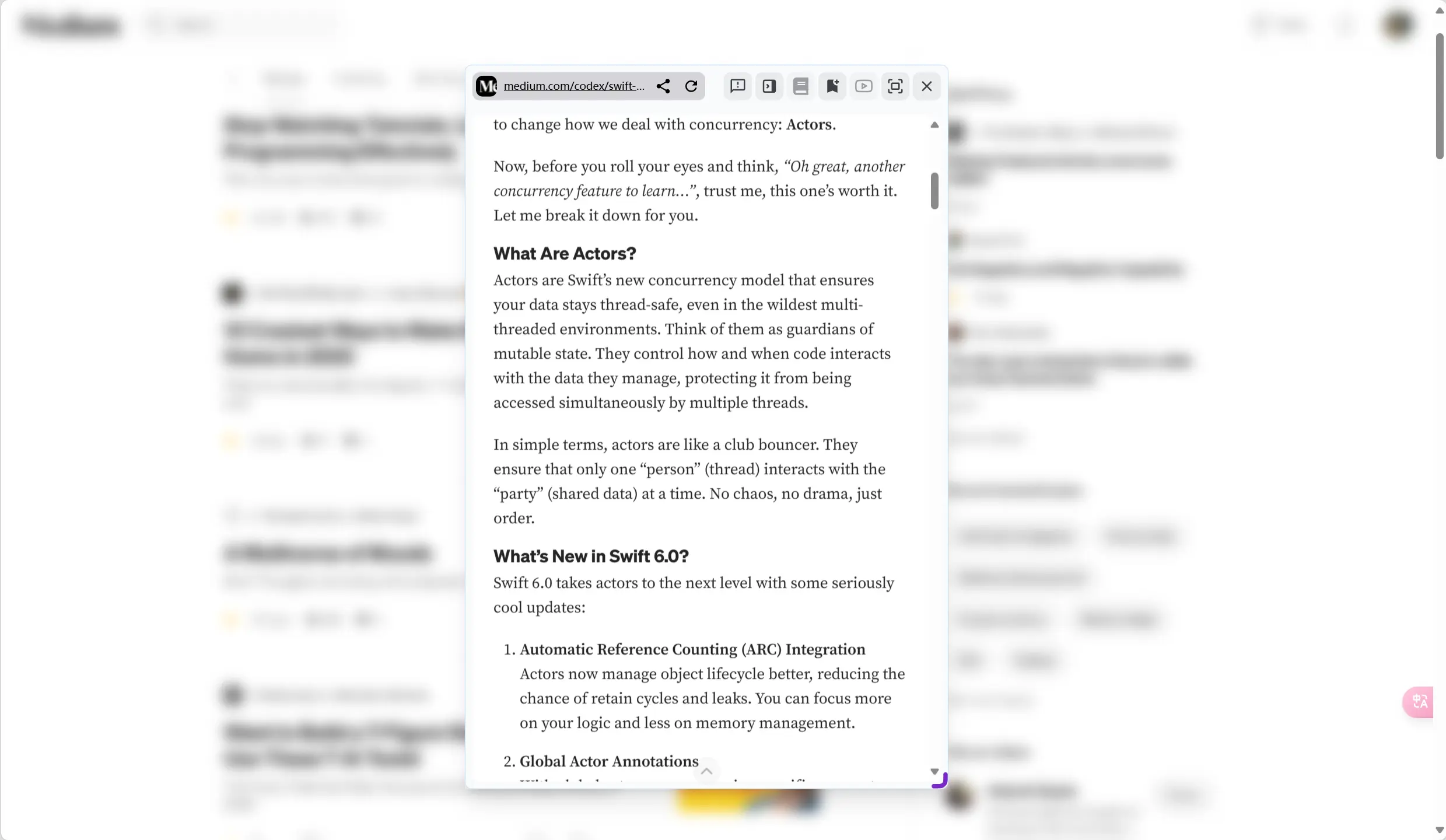
Peek Focus
A browser extension that lets you view the content of links without opening a new tab. I’ve been using it frequently lately—it’s incredibly handy when reading online articles.
Others
In the future, I might share some useful tools that I use, interesting happenings, and valuable articles. At the very least, I plan to clear out my weekly bookmarks—although these selections are heavily influenced by my personal tastes. I might also just talk about random things to keep the updates coming.