

Bolyn Weekly is published weekly, sharing events in my life, observations, and topics of interest—though most of the time it’s just idle chatter.
20250308
Word Is a Typesetting Tool
After four years of studying, I’ve come to realize that Word is merely a typesetting tool—a formatting software whose sole purpose is to arrange text. You shouldn’t store your notes in Word; you only need to open Word for formatting either before sending your content to someone or after you’ve completed writing it. There's no need to use it at other times.
What should a note-taking app offer? For me, there are a few key points: first, it should launch quickly and allow for easy editing; second, it should be easy to search so I can quickly find and modify what I need; and third, it should be lightweight. The biggest problem with using Word for writing is that you constantly have to worry about formatting—font, size, spacing, alignment—which wastes time, not to mention dealing with more complex formatting when needed. This makes it a heavy burden for writing.
A good note-taking app should eliminate writing pressure, allowing you to concentrate solely on the content. The main focus should be the content itself; any formatting is just an external layer that only needs attention when you want to display the content.
So, let’s repeat it three times: Word is a typesetting tool, Word is a typesetting tool, Word is a typesetting tool!
Don’t Obsess Over Technology
Technology in itself is useless; only solving problems makes it useful. For most tasks, aside from a few cases that require advanced techniques, simple technology is all that’s needed.
Function determines form; the form exists to serve the function. Focusing on appearance at the expense of functionality is pointless. The proper form should naturally emerge through the process of solving the problem, not by being forced. Natural evolution is the best state.
Exercise
Last week, I only went for one run—10 kilometers. I must reflect on my slight lapse. 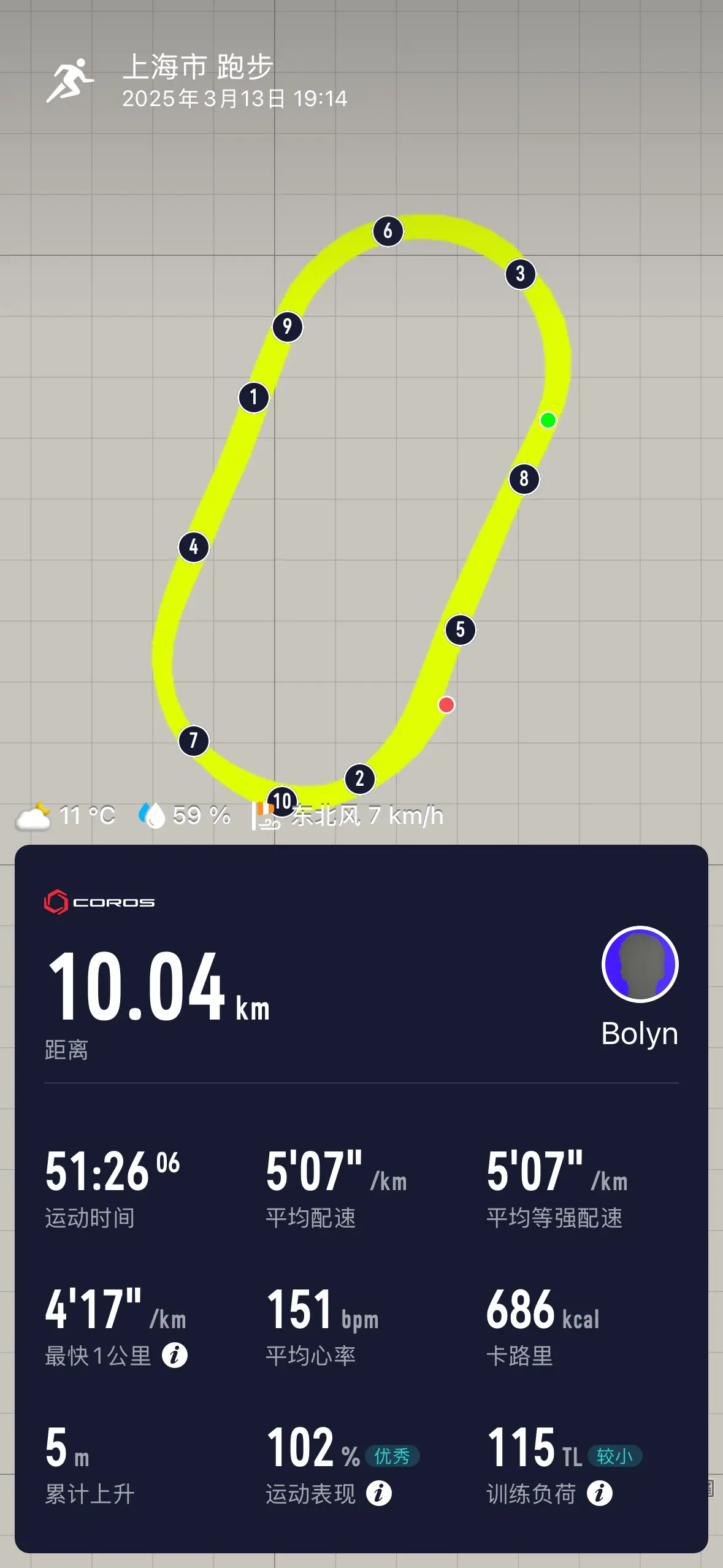
Thesis Progress
After a month of arduous formula derivations, under the steady guidance of my advisor and through persistent effort, I’ve finally completed the derivation for my thesis formula. The formula is extremely challenging—my background in advanced calculus and linear algebra is almost non-existent, and since my work is purely theoretical, I found it very difficult to grasp despite having ample reference material from my advisor. Fortunately, I managed to get it done.
My math skills might now be comparable to that of a recent high school graduate, as I kept making errors. I even made mistakes that middle and high school students might make—for instance, assuming that if AB = C and B = 0, then A must equal C. I ended up sending that incorrect result to my advisor. 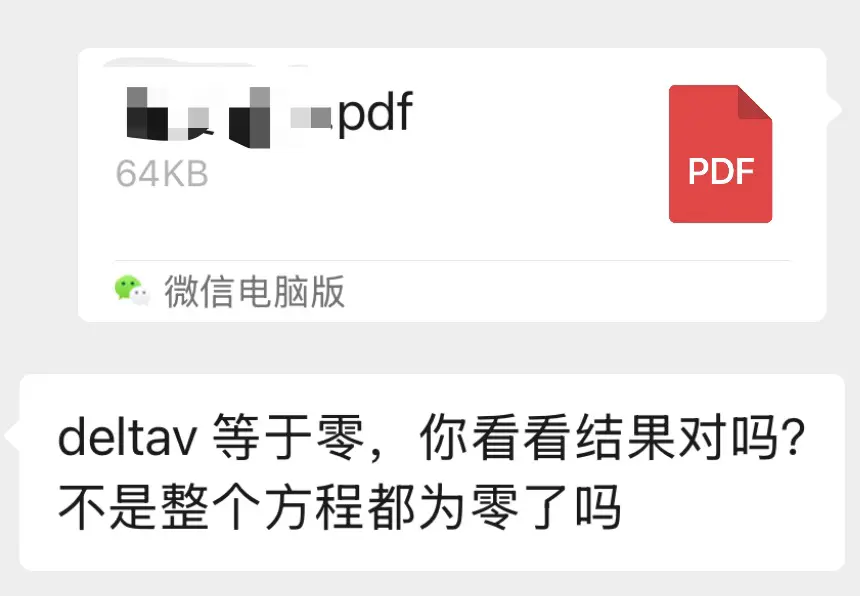
Clearly, this isn’t something I’d encounter in high school; I simply got lost in the formula derivations.
Now that the formulas are complete, I’m running experiments. Previously, I used Python for local execution with small datasets and fast processing. However, this thesis involves 27 sets of experiments, each taking six to seven hours. Even a slight error in parameters can ruin everything, wasting an entire day. Thankfully, I can now submit multiple groups with different parameters in one go.
After several trial runs and thanks to my advisor’s excellent code, all parameters are now correctly set, and the experiments are running smoothly with good results. When the parameters are right, the results follow suit. Just this morning, I completed one-third of my thesis experiments. Now, I only need to adjust the parameters for the remaining sets and finish running the experiments.
A new challenge has arisen: the data is in a pure binary format, and I haven’t figured out how to create graphs yet. I hope to resolve that issue next week. Once that’s done, everything else will just be repetitive tasks without any need for new methods.