

Bolyn Weekly is published every week, sharing personal experiences, observations, and things of interest—often just idle chatter.

Cover Image: The staircase in the French-Chinese Center at school. It is the only straight up and down staircase I’ve encountered, spanning five floors—truly fascinating.
2025-04-26
Creation Is the Best Way to Combat Nihilism
Compared to consumption, creation is far more effective. When you start making things—whether it’s writing, running, scripting, or developing a new game—there are only two possible outcomes. Either you realize you’re not that interested in it, or you truly enjoy it and delve deeper. Either way, it’s worthwhile. In contrast, mindlessly consuming information is a superficial act that leaves you overwhelmed by data even though it may seem like you’re absorbing a lot.
Create Systems, Not Heroes
In any endeavor requiring teamwork, consistency and streamlined processes are crucial. Do not rely on someone’s exceptional skills. That’s dangerous because if they leave, the project could suffer devastating setbacks. Standardized processes and SOPs help minimize such losses. No one is indispensable; everything should remain within controllable limits.
Xiumi Typography
Last week, I completed a WeChat public account article’s drafting and formatting in just two hours. You can see the article here: # This Spring Season Is Even More Exciting With You. Of course, achieving such speed was possible only with AI assistance.
This marks the third article I’ve formatted using Xiumi. Before this, aside from using the native editor in the public account backend, I had hardly ever used another formatting tool. After four years and two articles of practice, I am very satisfied with both the speed and quality of this third article, so I decided to record the experience.
Exercise
It’s been a long time since I last ran or played ball games. Now that my thesis is nearing completion and my legs have recovered well, it’s time to resume running.
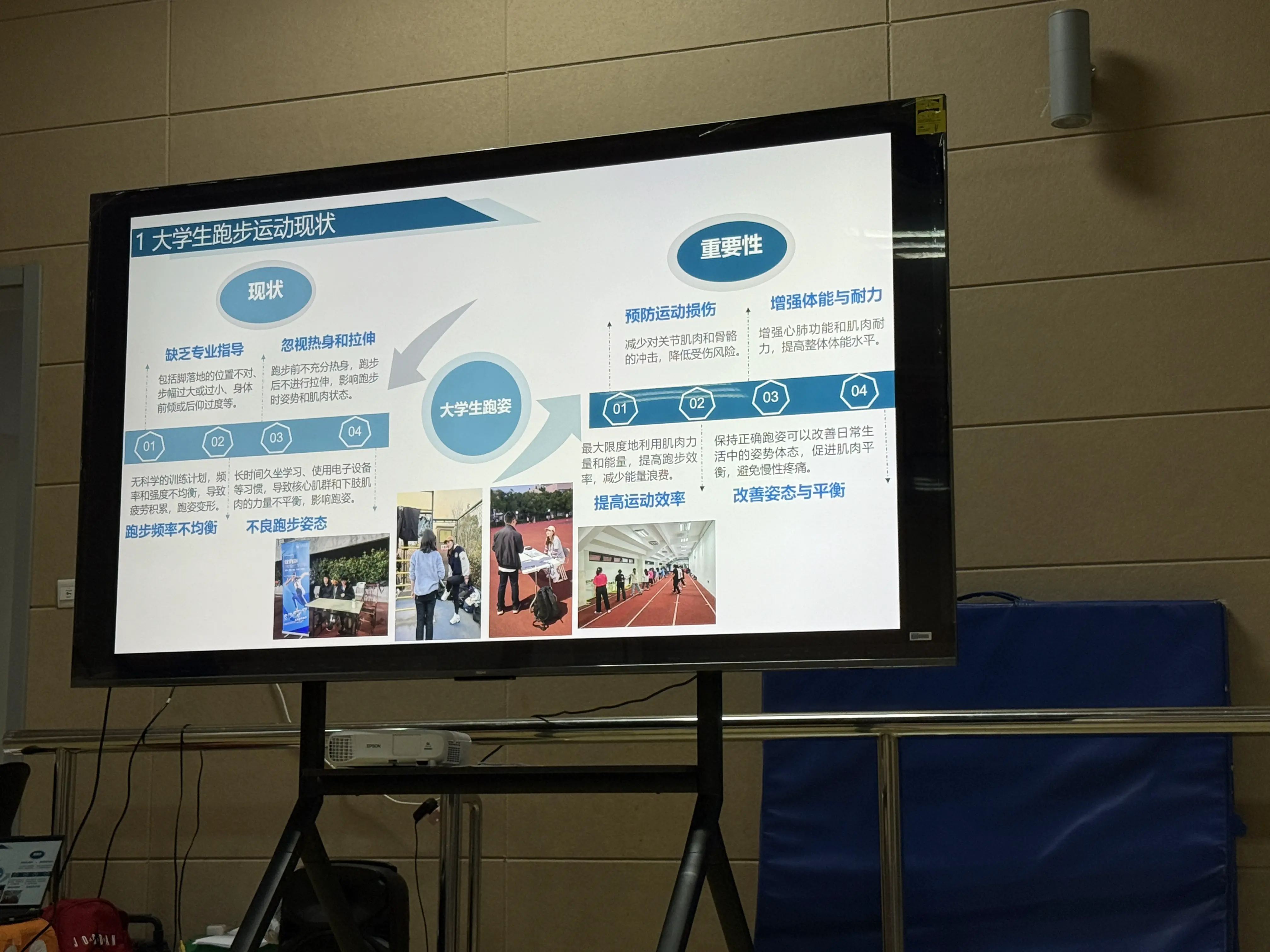
I signed up for a workshop focused on endurance training and running posture correction. I attended my first class this Friday, listened closely, and trained enthusiastically. I hope to regain the pace I had a year ago.
Today, registration for the Hangzhou West Lake Marathon began. I was excited as I opened the registration page, only to be disheartened. The event requires specific finishing times—145 minutes for a half marathon or 340 minutes for a full marathon. Although I have the ability, I haven’t participated in any marathons this past year, so I wasn’t eligible to register. It was heartbreaking.
In the future, I must participate in at least one marathon every year. A small goal—not to achieve top times, but simply to finish at a normal pace and maintain my current physical condition until I complete my PhD—would be the greatest blessing.
Graduation Project
It’s nearly over now—the experiments are done, and the thesis is almost finished. I just need to tweak the thesis a bit more and then I can wait for graduation.
Working on this graduation project has been, in two characters: disgusting. Since finishing the first set of experiments in March, I have spent the majority of my time creating figures. I conservatively estimate I made around two thousand images, meticulously tuning each one to get that single figure that looked even remotely decent—it’s truly revolting.
With the same set of data, the resulting figures are almost identical in outcome, yet I had to obsess over adjustments of 0.01 or 0.001 discrepancies, modifying continuously until I wanted to vomit. Every image required repeating the same steps. In the end, only two or three dozen images made it into my thesis. It’s disgusting—simply disgusting.
When I met with my advisor yesterday, he already suggested that I stop using my current method for creating figures and recommended a seemingly more reliable approach. However, after returning home that evening and experimenting on my own for a while, I suddenly gained a better understanding of my own data—an epiphany. Thankfully, I didn’t abandon my original approach in the final stage in favor of his.
This morning, I sent him the newly finished figures. They were excellent—perfect. All the hours spent creating them paid off, as I managed to achieve the best possible visual outcome without altering the data, provided the data itself is sound. I trust that during my PhD, I won’t have any major issues with this type of data visualization.
I now believe my understanding of data visualization is at least on par with my advisor’s. While he relies on ready-made tools to generate figures, I write my own code from the raw data with a high degree of customization. Initially, my results were unsatisfactory; he knew they were off and could only indicate the general direction but not offer specific improvements.
It’s reasonable to conclude that my grasp of data visualization now matches or even exceeds his. The quality of the figures aside, I can achieve the best possible outcome given the data. Of course, if my advisor ever expects results that surpass what the data allows, I might just lose my temper.
Good; despite not writing any core code or understanding algorithms a bit, this graduation project wasn’t for nothing. I gained an immensely important skill—sometimes, the quality of a few figures determines the success of the result, even if they are considered just peripheral work by the advisor.
Sigh, well, I’m still just a worker. I have no clear understanding of what I’m supposed to do; I can only work under my advisor’s direction. Going solo would be impossible. For now, I can still find some interfaces to work with—after all, it’s still undergrad. But once classes resume in September, I’ll have to face things on my own. It’s daunting.
New WeChat Friend
Tencent has added an entry point for Yuanbao within WeChat. Previously, it was done through an app, but now it is embedded directly within WeChat. Let’s analyze this from two perspectives.
From a WeChat user’s perspective: Every day, we have to handle a large number of messages—personal chats, group chats, and a substantial amount of articles to read. This used to be a huge time sink, but with Yuanbao, it analyzes the content and provides a rough idea, helping decide whether to read in detail. It’s extremely convenient.
Currently, Yuanbao can only process articles and does not yet support group chat content, but I believe adding group chat support is just a matter of time. Moreover, Yuanbao can only be added individually at the moment—it cannot be integrated into a group chat. Bringing Yuanbao into groups would be a significant advantage for users—whether that will happen remains to be seen.
From an entrepreneur’s perspective: Since ChatGPT’s release in December 2022, its capabilities have amazed many. Seizing the opportunity, numerous entrepreneurs began their ventures. At that time, there were two main approaches in China: one was to use the API to develop vertical AI chatbots on new websites, and the other was to integrate AI into existing mainstream apps. I chose the latter.
WeChat is the primary communication tool in China, and logging into ChatGPT involves certain hurdles. If one could interact with ChatGPT directly within WeChat, I was sure there would be people willing to pay for that. So I got started and achieved some success. For more details, click the link: Integrating ChatGPT into WeChat. However, the progression was slow due to strict WeChat regulations—it wasn’t a long-term solution.
Meanwhile, many people who chose the first approach have achieved impressive results—thanks in part to their own technical skills and ability to quickly leverage new technologies.
Now, in 2025, we see a trend: nearly every major app has integrated AI. The result? Many who followed the second approach have been phased out, because the official integrations naturally offer a better experience.
For example, in 2023, aside from directly integrating ChatGPT into WeChat to provide intelligent chat, another approach was to convert WeChat Work into an intelligent assistant to handle articles and create mind maps. Now, with Yuanbao available, all of that has been rendered obsolete.
Surviving in the market are those who utilize AI to focus on a vertical niche—for instance, current vertical AI tools in programming such as Cursor, Windsurf, and Bolt, or AI search tools like Proplesity and Dia. These have all developed well, and even more vertical AI tools are emerging.
Reality has proven that embracing AI is the right move, but never within the range of major companies’ control. Their pace of technological advancement will always surpass yours. Instead, focus on a niche vertical market for long-lasting success.